A new brand for Unobravo's first AI product.
Unobravo wants looking after your mental health to be normal, but therapy only reaches as far as licensed therapists, local rules and price allow. Meanwhile, people were turning to general AI chatbots for help with anxiety and low mood, and those tools weren't built for it.
Led the brand work for Clary with Planes, from positioning to launch. The first call was architectural: rather than build a separate brand from nothing, we evolved Clary from the new Unobravo identity. That kept Unobravo's clinical credibility behind it and left us free to decide later how close to Unobravo Clary should sit.
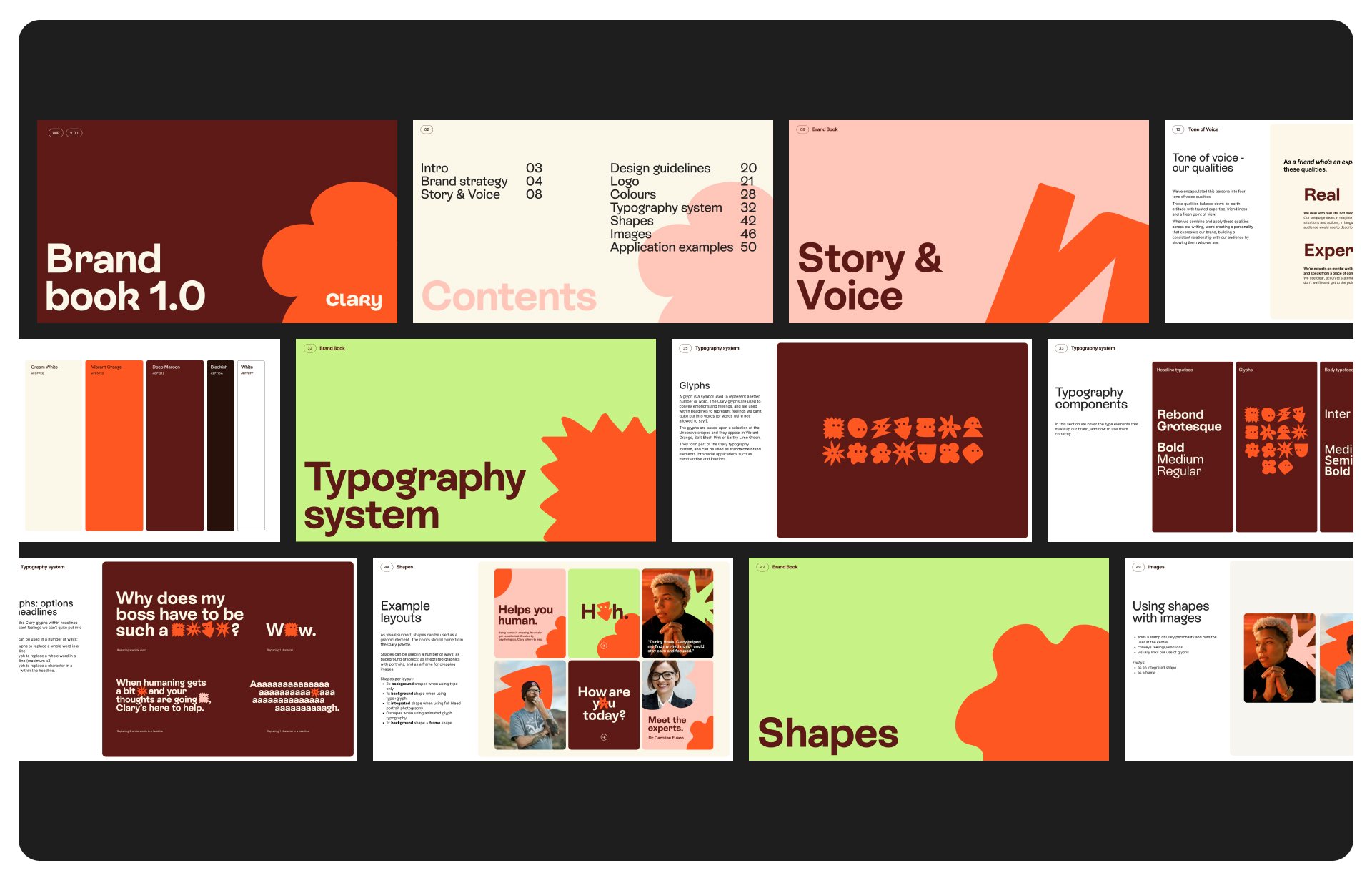
The first decision was where Clary sat in the brand architecture. A standalone brand would have given us a clean start in a crowded AI market, but it would have thrown away the trust Unobravo had built with millions of sessions. Folding Clary into Unobravo would have tied an experimental product to a clinical service it was never meant to replace.
So we did neither. We built Clary out of the new Unobravo identity we had just finished: the same typeface, a palette taken from the same family, the same way of speaking plainly about hard things. It was recognisably related without being a sub-brand. That gave us flexibility. We could bring Clary closer to Unobravo or set it further apart as the product strategy developed, without rebuilding anything.
Every competitor had a chatbot, so the AI alone gave nobody a reason to choose Clary. People would choose it for what it helped them do: put a name to what they're feeling and work out a next step.
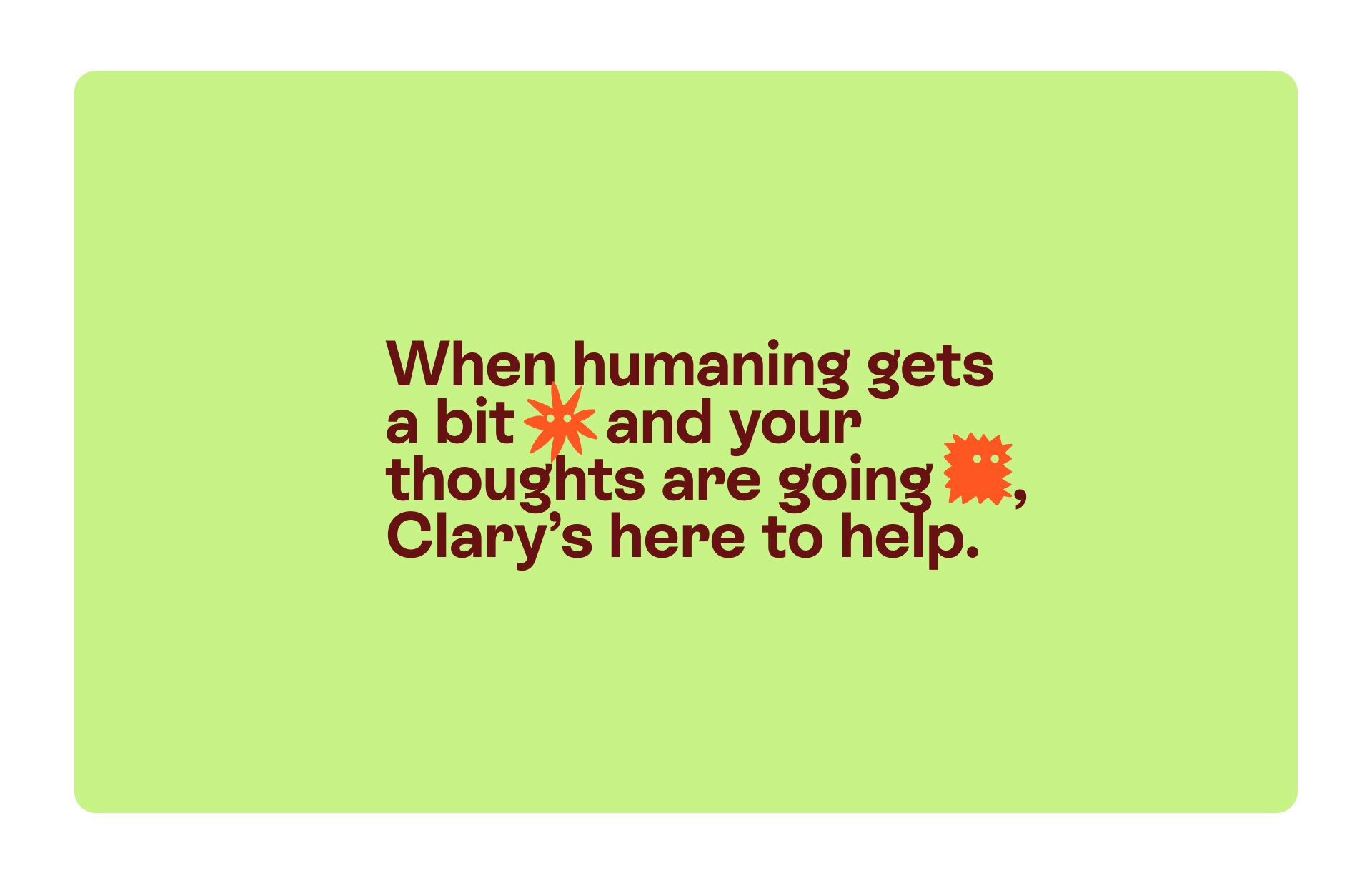
That became the line, Clary helps you human. Being human is hard, and it gets complicated. Clary helps you through it. The voice follows the same idea. It sounds like a friend who knows a bit about mental health, talking the way people talk on a bad day: warm, practical, and never overblown.
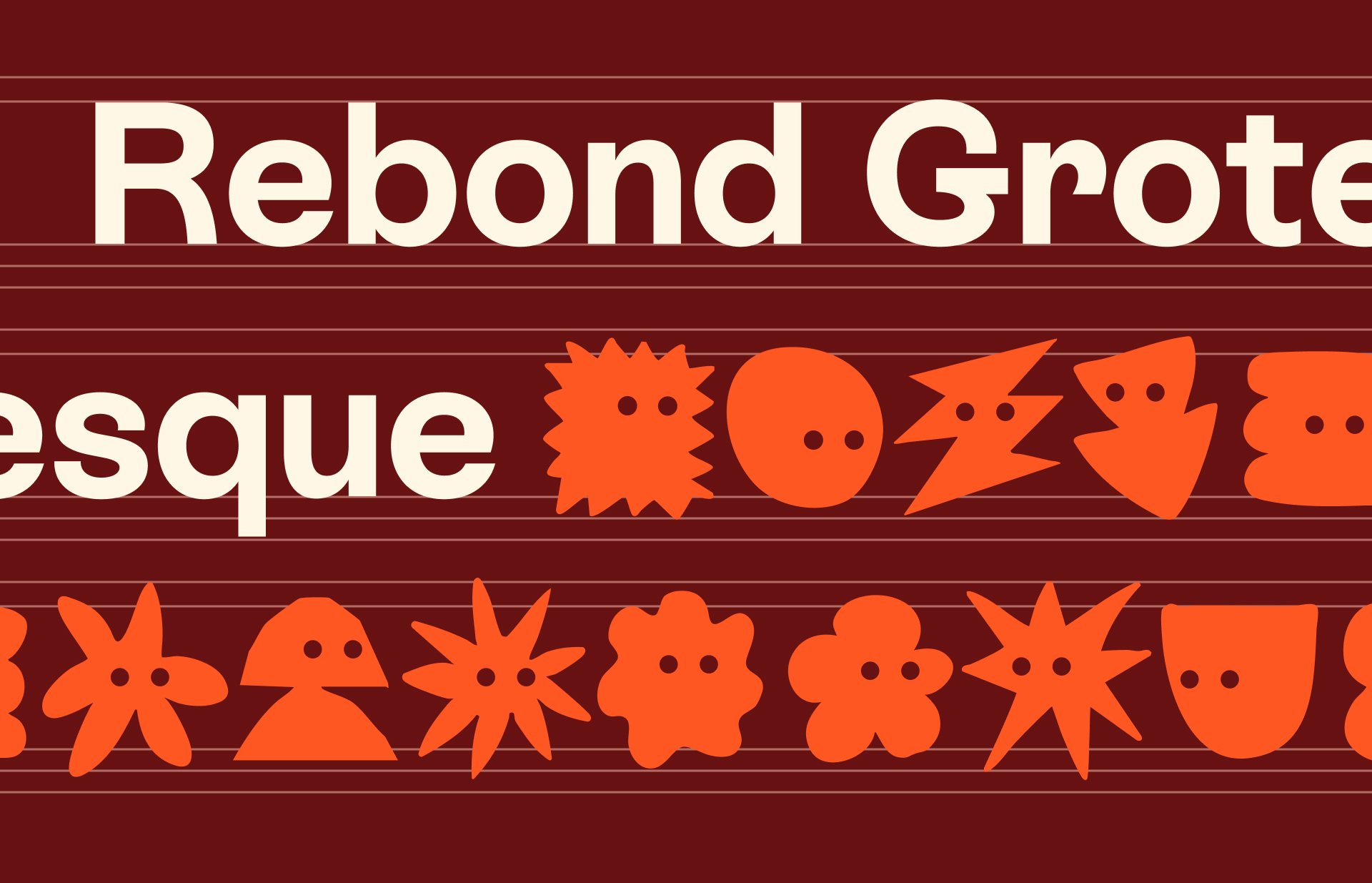
Feelings are often hard to put into words. You just know it's a lot. So the identity gives those feelings a form: a family of shapes and glyphs, each standing in for an emotional state, that drop into headlines where the words run out.
Everything else is set in Rebond Grotesque, the typeface from the new Unobravo identity. It links the two brands, and it meant Clary looked like it came from people you could trust before anyone read a word.
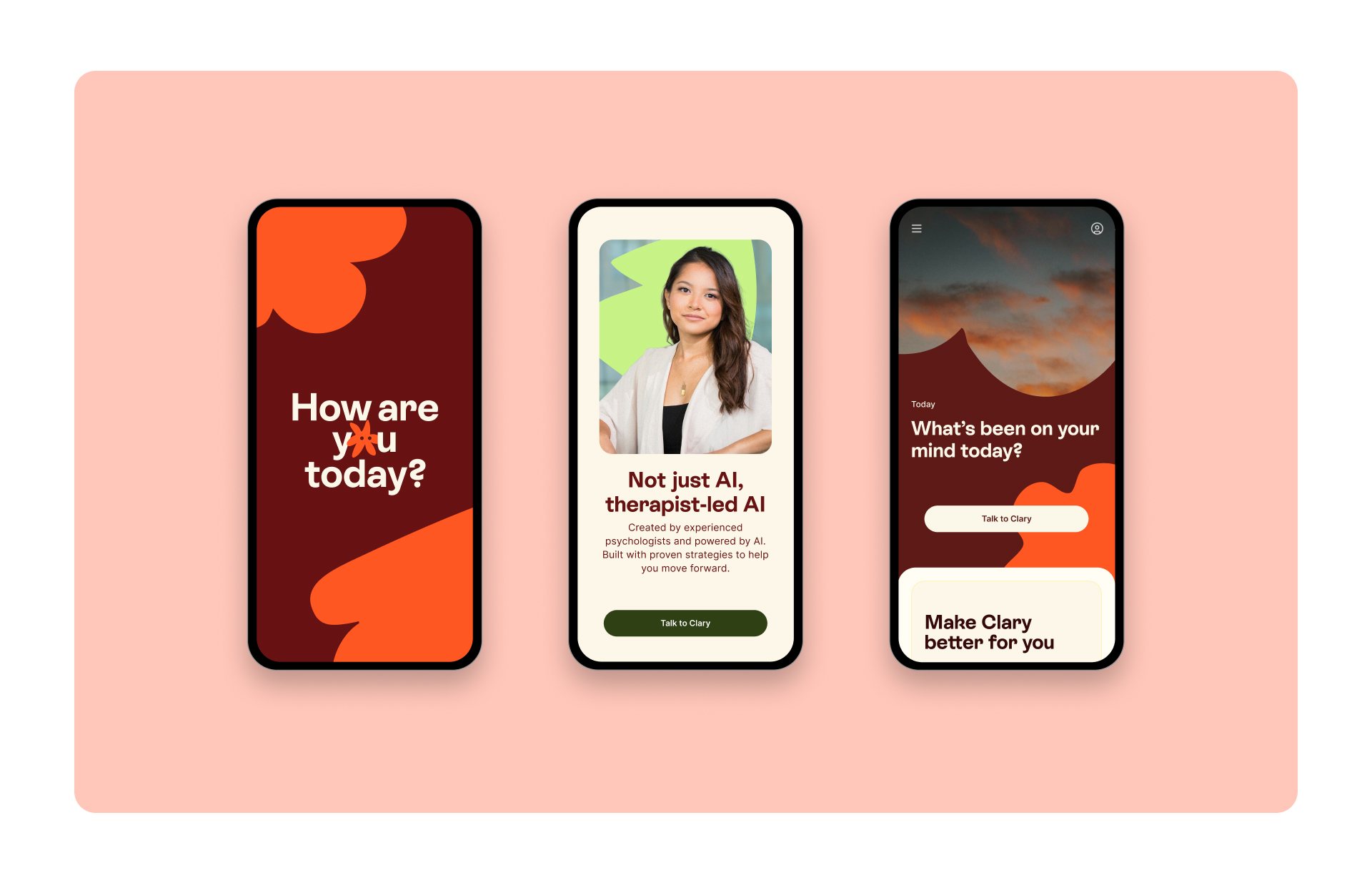
The brand and the app were made at the same time. Product design couldn't wait for a finished identity, so we agreed early what to lock down and what to leave open, and brought the two together towards launch.
In an AI product, the words are the interface. That made voice a product decision as much as a brand one. Working with the clinical and product teams, we set firm limits on language: Clary never calls itself therapy, never promises to keep you safe, and is designed to discourage dependency.
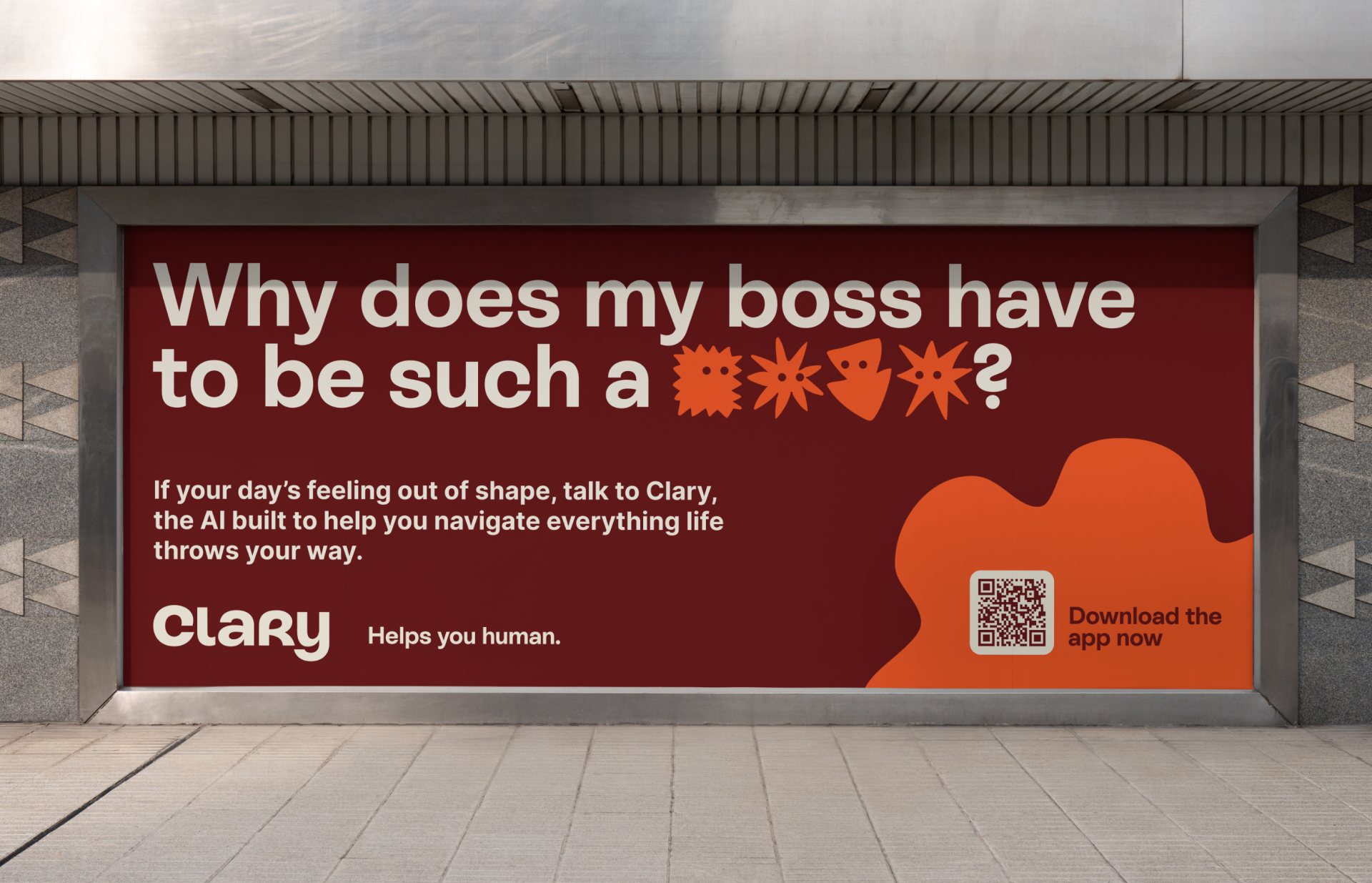
Clary launched in September 2025 as a standalone app in 15 markets, with campaigns that say out loud what people usually keep to themselves. It reached 50,000 users, and cost per install fell from €12 to €5-6.
The architecture decision paid off when the strategy changed. When Unobravo began bringing Clary into the therapy journey, as a companion between sessions, the brand needed no rebuild. It was designed from the start to sit close to Unobravo.
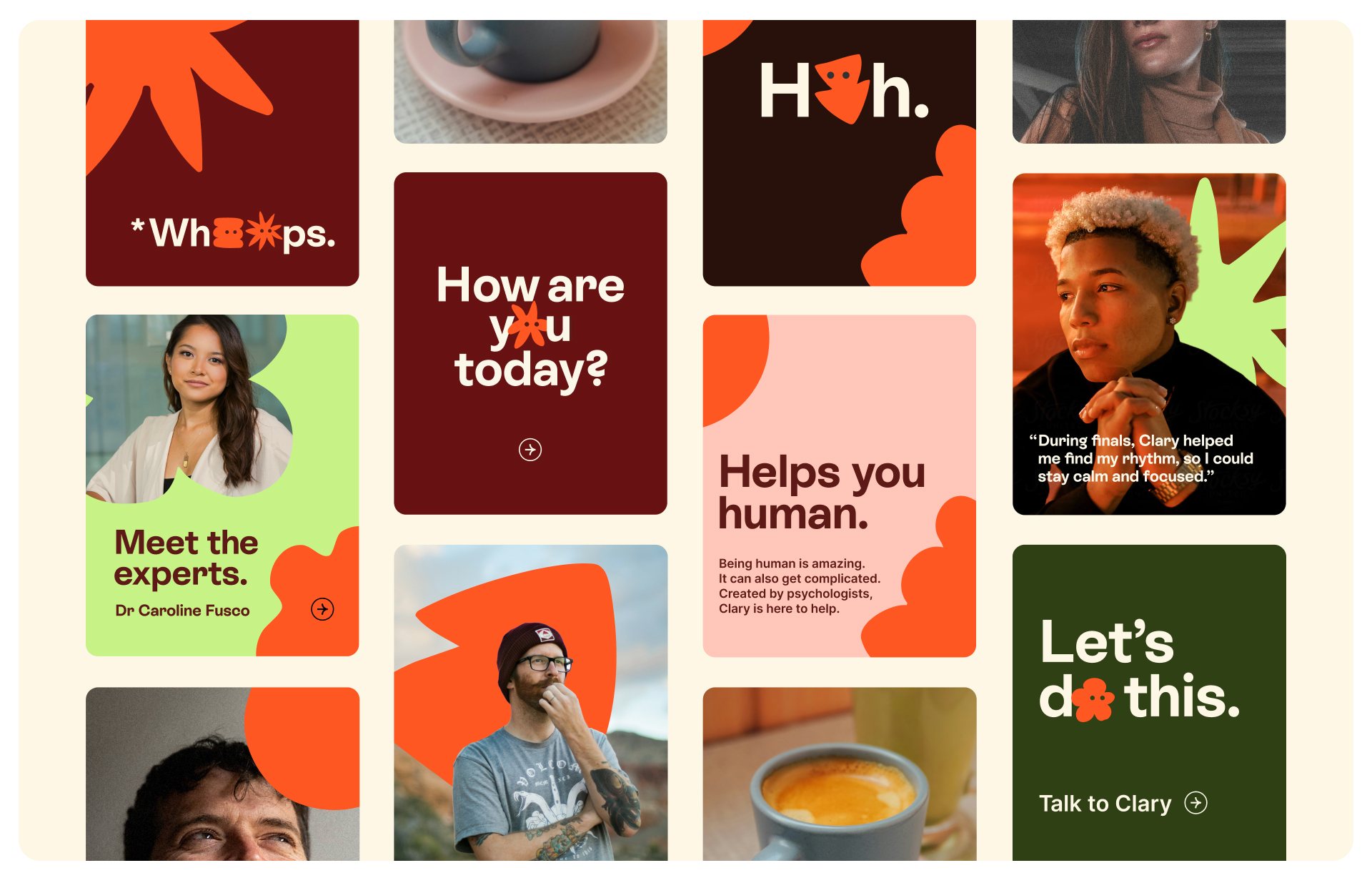
Identity designed with Planes. Product design led by Andy Lobban.
The full numbers aren't on here.
I'll take you through the commercial results, and what I'd do differently, on a call.
Book a call